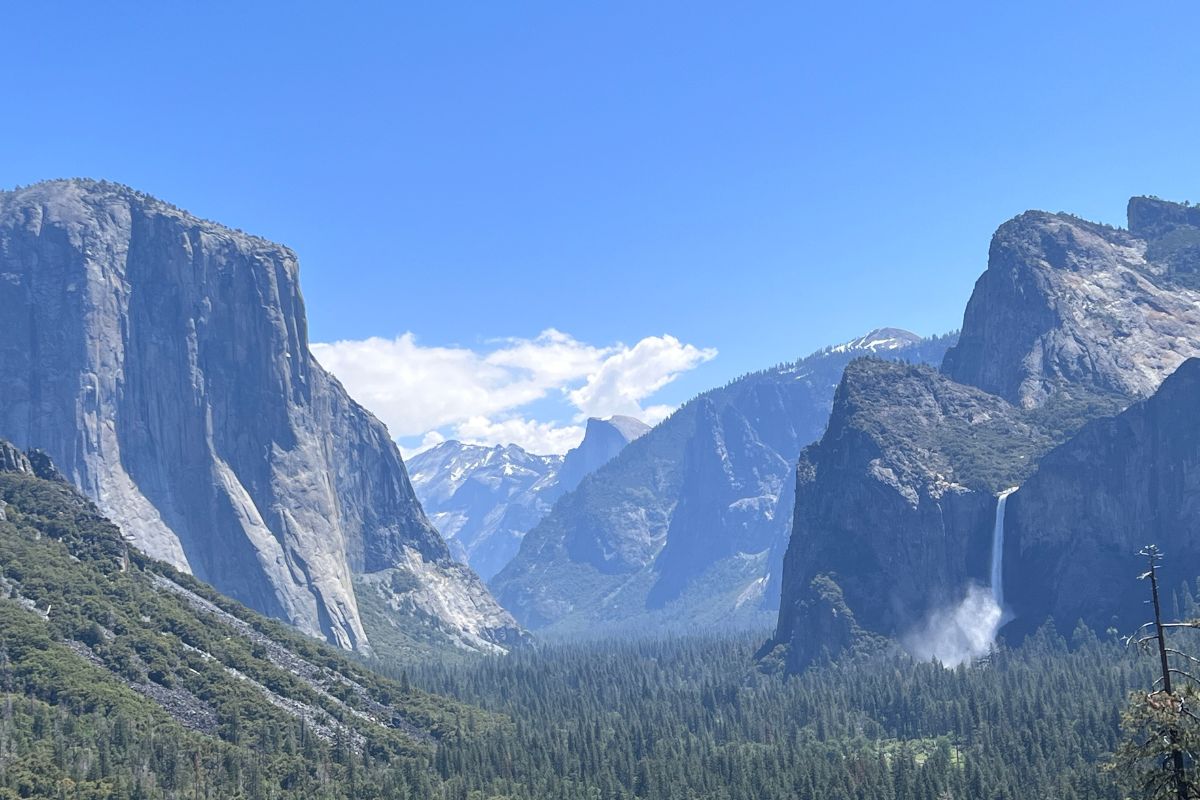


You’ll want to spend at least two days in Yosemite for time to see the national park’s main sights beyond El Capitan, from Grizzly Giant Loop to Hetch Hetchy. Don’t worry, you aren’t the only person wondering how many days in Yosemite are enough to do everything you want. With at least two days and some careful planning, you can see the main sites.
The number one mistake visitors often make is planning to do more than is possible. You can cover a lot of ground in one day, but you can’t see it all. Our itinerary spans four days so you can make the most of your trip. How many days you need in Yosemite comes down to which sites you’re most excited to visit. Here’s how we break it down:
| Yosemite Itinerary Breakdown | |||
| Day One | Day Two | Day Three | Day Four |
| Essential sights and trails Choose 2–4: Lower Yosemite Falls TrailMerced RiverMist TrailVerna FallsNevada Falls John Muir Trail | Forests and lookout points Choose 4–6: Mariposa GroveGrizzly Giant LoopGlacier PointTaft Point Trail Sentinel Dome TrailBonus hike (listed below) | Hikes surrounding water features. The top sights, plus options like: Hetch Hetchy ReservoirO’Shaughnessy DamWapama Falls TrailCarlon Falls TrailForesta Falls TrailLittle Nellie Falls TrailLookout Point Trail | |
These trails offer fantastic views of the Valley, Half Dome, El Capitan, and other gems. No matter how many days you have to spend in Yosemite, whether it’s two or four, we have an itinerary for you.
Table of contents:
- Day One in Yosemite National Park
- Day Two in Yosemite National Park
- Day Three in Yosemite National Park
- Day Four in Yosemite National Park
- One Day in Yosemite
- About Yosemite National Park
- The Seasons in Yosemite
- Parking Considerations
- Daily and Annual Passes to Yosemite
- FAQs About How Many Days To Spend in Yosemite
Two-, Three- & Four-Day Yosemite Itineraries
When you visit Yosemite, how many days you spend exploring is up to you, but we recommend setting aside at least two days to cover the essential sites. You’ll also want three or four days to visit some beloved watering holes. Here’s how we’d plan a two- to four-day trip to Yosemite National Park:
| Four-Day Yosemite Itinerary Overview | ||||
| Day One | Day Two | Day Three | Day Four | |
| Morning | Lodge breakfast, Tunnel View, Bridalveil Falls, El Capitan, Cook’s Meadow Trail, Lower Yosemite Falls Trail | General Store for breakfast and snacks, Mariposa Grove, Grizzly Giant Loop | Lodge Breakfast Gaylor Lake Trailhead, Tuolumne Meadows, Soda Springs | Lodge Breakfast, Hetch Hetchy Reservoir, O’Shaughnessy Dam, Wapama Falls Trail, Carlon Falls Trail, Foresta Falls Trail, Little Nellie Falls Trail, Lookout Point Trail, picnic at Reservoir whenever hunger strikes |
| Afternoon | Picnic at Merced River, Mist Trail, Verna Falls, Nevada Falls, John Muir Trail | Picnic at Mariposa Grove or Glacier Point, Glacier Point, Taft Point Trail, Sentinel Dome Trail | Tenaya Lake, picnic around the lake, Olmsted Point, May Lake Trail | |
| Evening | Dinner and s’mores at the Lodge | Dinner at the Lodge, stargazing on the patio | Dinner at the Lodge | Dinner at the Lodge, rest before traveling |
Bonus: Don’t forget to stop and explore as you follow this itinerary. While planning is important when visiting any national park, so is a bit of spontaneity. There are numerous lookout points and smaller trails all over Yosemite that you won’t want to miss.
Day One in Yosemite National Park
Day One Yosemite Itinerary at a Glance:
- Have breakfast at your Yosemite Hotel
- Visit Tunnel View
- Hike to Bridalveil Falls
- Drive farther into the Valley to see El Capitan
- Explore Cook’s Meadow Trail and/or Lower Yosemite Falls Trail
- Picnic lunch at Merced River
- Head out on Mist Trail and branch off to Verna Falls, Nevada Falls, or the John Muir Trail
- Enjoy dinner and s’mores at the Lodge
1. Breakfast
To ease into your first day in Yosemite, we recommend an early start and a hearty breakfast to fuel the day. Our Yosemite Hotels offer a delicious made-to-order breakfast, served 7–10:30 a.m. daily. Be sure to purchase the Bed & Breakfast package (available at all three hotels) for the best value.
2. Morning Activities
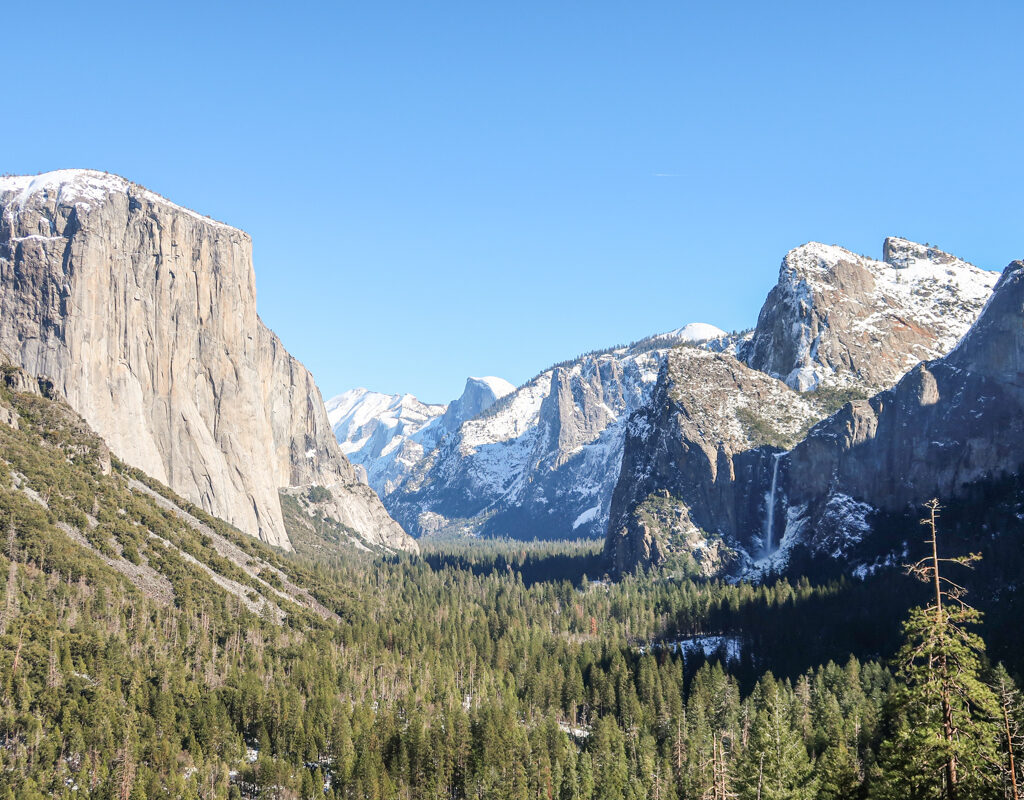
For the best first impression, take Wawona Road into Yosemite Valley. Drive through the Wawona Tunnel and reach your first destination, Tunnel View. This is the best-known view of Yosemite, made famous by photographer Ansel Adams.
Bonus: Visit the Ansel Adams Gallery in Yosemite Valley. Professional prints, including photos of the top sights you experienced on your vacation, are available for purchase.
Just past Tunnel View, you will find your first hiking trail to Bridalveil Falls on the right. This hike is 1.2 miles round trip and rated as easy. Bridalveil Falls is one of the waterfalls that dries up later in the year, so you will only see water during the spring and early summer.
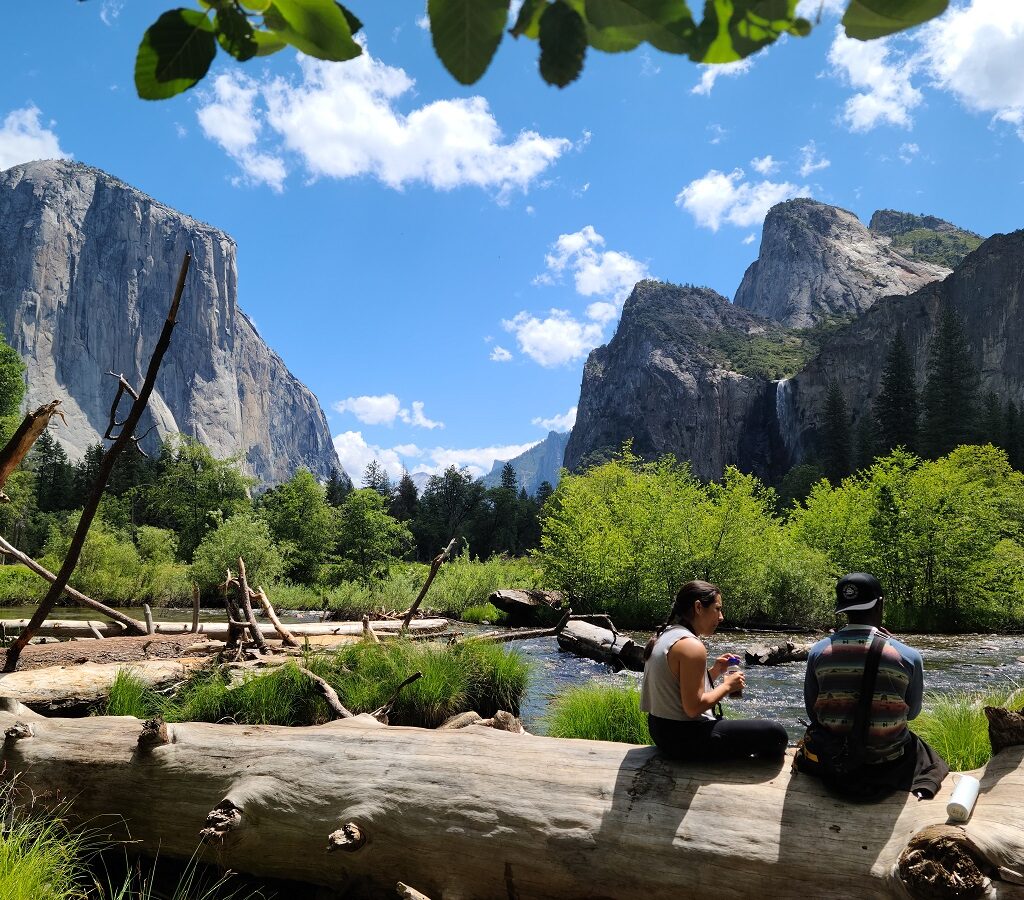
Jump back in the car and head a little further into Yosemite Valley to get your first up-close-and-personal view of El Capitan. This granite monolith stands about 3,000 feet high. From the park’s telescopes, you can look up and see the extreme rock climbers making their way to the top.
Bonus: If time allows, hike over to El Capitan Meadow just below the giant monolith. You might have the chance to talk with one of the extreme rock climbers just before they start their climb. The view looking straight up from below gives you a whole new perspective.
Once in the Valley, find a good parking spot. Any location works, since you’ll be exploring the Valley throughout the day.
The best way to get acquainted with Yosemite Valley is to hike the Cook’s Meadow Trail. This hike is a 2.25-mile loop around the Valley and rates a 2 out of 10 in difficulty. It can be completed in one to two hours.
Cook’s Meadow Trail will give you multiple vantage points of Yosemite Falls and Half Dome. You can also see the Sentinel Bridge, Sentinel Beach, Yosemite Chapel, the Swinging Bridge, and the Yosemite Lodge. At the Lodge, explore the Food Court, Coffee Corner, Gift Shop, and the Ansel Adams Gallery.
We highly recommend making time for the Lower Yosemite Falls Trail. It branches off the main trail just east of Yosemite Lodge and only adds a half mile to your hike. The views are worth it, even if you visit when the waterfall is dry. Yosemite Falls stands over 2,400 feet and is the tallest waterfall in North America.
Bonus: On your next Yosemite vacation, plan to hike the Upper Yosemite Falls Trail. This hike is 7.6 miles round trip and rates high on the difficulty level, but the views are well worth it.
3. Lunch
After a slam-packed morning, a picnic lunch along the Merced River is a great way to break on your first day in Yosemite.
Alternatively, head to Curry Village on the east end of the Valley next to the campground office. Pizza Patio serves delicious pizza and ice cream to refuel you for the afternoon activities.
4. Afternoon Activities
Now that your legs are warmed up and your belly is full, it’s time for one of the most famous hikes in Yosemite. Just past Curry Village and the campgrounds (approximately three-quarters of a mile), you will find the Mist Trail Trailhead. There are a couple of options for this hike, depending on how much daylight you have left and how many more steps you want to take. Both of the waterfalls on this hike still flow steady into the summer months.
The first sight you come to on the Mist Trail is Vernal Falls. By this point, you will have encountered some slightly steep stone stairs cut into the mountainside and a medium level of exertion. If you turn back now, you will complete a 3-mile hike when you reach the trailhead.
If you continue, you will reach the top of Nevada Falls, putting your hiking skills to the test. This is the highest and closest you can get to Half Dome without a lottery permit.
Note: A permit is required to hike to the top of Half Dome seven days per week. If you would like to apply for a permit, learn more here.
Once you reach the top and take some awesome photos, retrace your steps back down the Mist Trail. When you reach the trailhead, you will have completed 7 miles. Or jump onto the John Muir Trail to return to the trailhead. This route won’t add much more time or many more steps, but you can catch even more incredible views. One amazing viewpoint lets you see Nevada Falls, Liberty Cap, and the smooth backside of Half Dome.
Once you make it back to your car, it’s time to call it a day and head back to the Lodge.
5. Dinner & S’mores
Grab dinner at the main dining building or on the outdoor patio. Dinner is served from 5 to 9 p.m. during the winter, and until 10 p.m. in the summer. After dinner, head over to the fire pit and toast some s’mores for dessert. But don’t stay up too late, tomorrow is a big day!
Day Two in Yosemite National Park
If you only have a couple of days to spend at the national park, use Days One and Two as your Yosemite two-day itinerary. If you’re visiting between mid-November and May, Day Two’s activities are not possible, so we recommend doing Day Four’s itinerary on Day Two.
Day Two Yosemite Itinerary at a Glance:
- Start at the General Store for a grab-and-go breakfast and to stock up on snacks and water
- Drive to Mariposa Grove
- Hike the Grizzly Giant Loop
- Drive to Glacier Point
- Hike Taft Point Trail and Sentinel Dome Trail
- Take a brief hike at the end of Glacier Point Road for a surprising view
- Enjoy dinner at the Lodge
- Stargaze on the patio
1. Breakfast
Since today’s sights are a bit further of a drive, we recommend stopping by the General Store and grabbing breakfast to go. Pick up some delicious made-to-order lattes, breakfast pastries, and make-your-own granola. Stock up on snacks and water while you are here. Today is also the day to pack a picnic lunch. The General Store carries all the supplies you’ll need.
2. Morning Activities
You can enter the park from multiple points to reach the Mariposa Grove from your Yosemite Hotel. The turnoff is where Highway 41 turns into Wawona Road, south of the Valley. This grove is the largest inside Yosemite with 500 giant mature sequoias. (You will have a chance tomorrow to see the other two sequoia tree groves.)
The best hike for your steps is the Grizzly Giant Loop. This trail is two miles with a medium level of difficulty. Along the way, you’ll see:
- The Fallen Monarch – a fallen sequoia approximately 15 feet wide at its base
- The Bachelor & Three Graces – a quartet of sequoias
- The Grizzly Giant – the largest and oldest sequoia in the grove, measuring 30 feet in diameter and an estimated 1,800 years old
- The California Tunnel Tree – the only living sequoia with a man-made tunnel drilled through the base
3. Lunch
Depending on what time you finish up your morning activities, enjoy your picnic lunch in Mariposa Grove or at the next destination, about an hour’s drive north.
4. Afternoon Activities
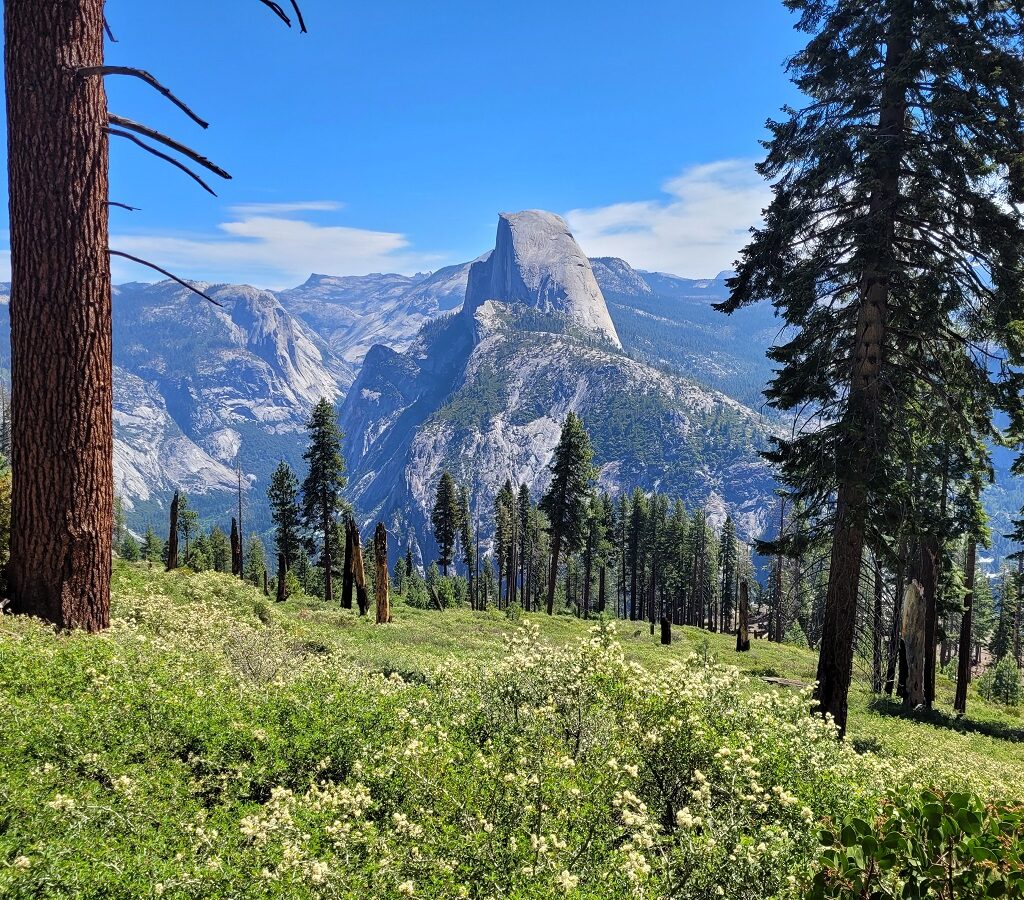
Further up Wawona Road, you will find the turnoff to Glacier Point. This vantage point gives you a view of Yosemite Valley and Half Dome from above and to the south. Just before you reach the top, stop off for a couple of hikes along the way.
- Taft Point Trail is 2.2 miles round trip with a great view of the Valley. As you approach the top of Taft Point, you’ll begin stepping over large vertical rock fissures.
- Sentinel Dome Trail is 2.2 miles round trip with amazing views of El Capitan, Yosemite Falls, and Half Dome. This trail is a bit steeper than the one to Taft Point, but both are rated a 3 out of 10 for difficulty.
A loop connects these two trails, totalling 4.9 miles. We recommend returning to the trailhead between hikes to grab water and use the restroom. Hiked separately, these two trails will take about 3 hours to complete.
The last view of the day is just 7.5 miles further up the road. Jump in your car and head to the end of Glacier Point Road for a short half-mile hike to the top. Words can’t describe this view — you’ll know what we mean when you see it!
5. Dinner & Stargazing
We know you will be tired after your full day of hiking and breathtaking scenes. Opt for dinner on the patio and some stargazing with your dessert.
Day Three in Yosemite National Park
Just like before, if you can’t stay the full four days, treat Days One, Two, and Three as your complete three-day itinerary to Yosemite. Today’s list can be completed in the order listed or in reverse, since they all take place along Tioga Road. Most of this Day Three itinerary is not possible if you’re visiting Yosemite during the winter, though the sequoia groves on the west end of our path remain accessible.
Day Three Yosemite Itinerary at a Glance:
- Fuel up with breakfast at Evergreen Lodge
- Start at the Gaylor Lake Trailhead and set out to see all three lakes
- Drive to Tuolumne Meadows
- Hike to Soda Springs
- Head to Tenaya Lake for a swim or some hikes
- Picnic around the Tenaya Lake
- Visit Olmsted Point
- Explore the May Lake Trail
- Enjoy dinner at the Lodge
1. Breakfast
You will need to start early today and pack your lunch for the adventures. For breakfast, we recommend the Evergreen Lodge for S’Mores French Toast made with graham cracker crumbs, marshmallow fluff, and chocolate. Or pick another delicious item off the Evergreen Lodge menu.
2. Morning Activities
These are all of our favorite sites and trails along Tioga Road. Choose which ones you’ll explore, but we recommend taking the longest drive in the morning to the far east end of Tioga Road.
The first stop is Gaylor Lake Trailhead. There are technically three Gaylor Lakes: The designated trail takes you from the road, up a steep mountainside, and into a valley to see Middle Gaylor Lake. You can follow the trail upward past Gaylor Peak to Upper Gaylor Lake. On your way back to the trailhead, step off the beaten path and explore the valley to see Lower Gaylor Lake.
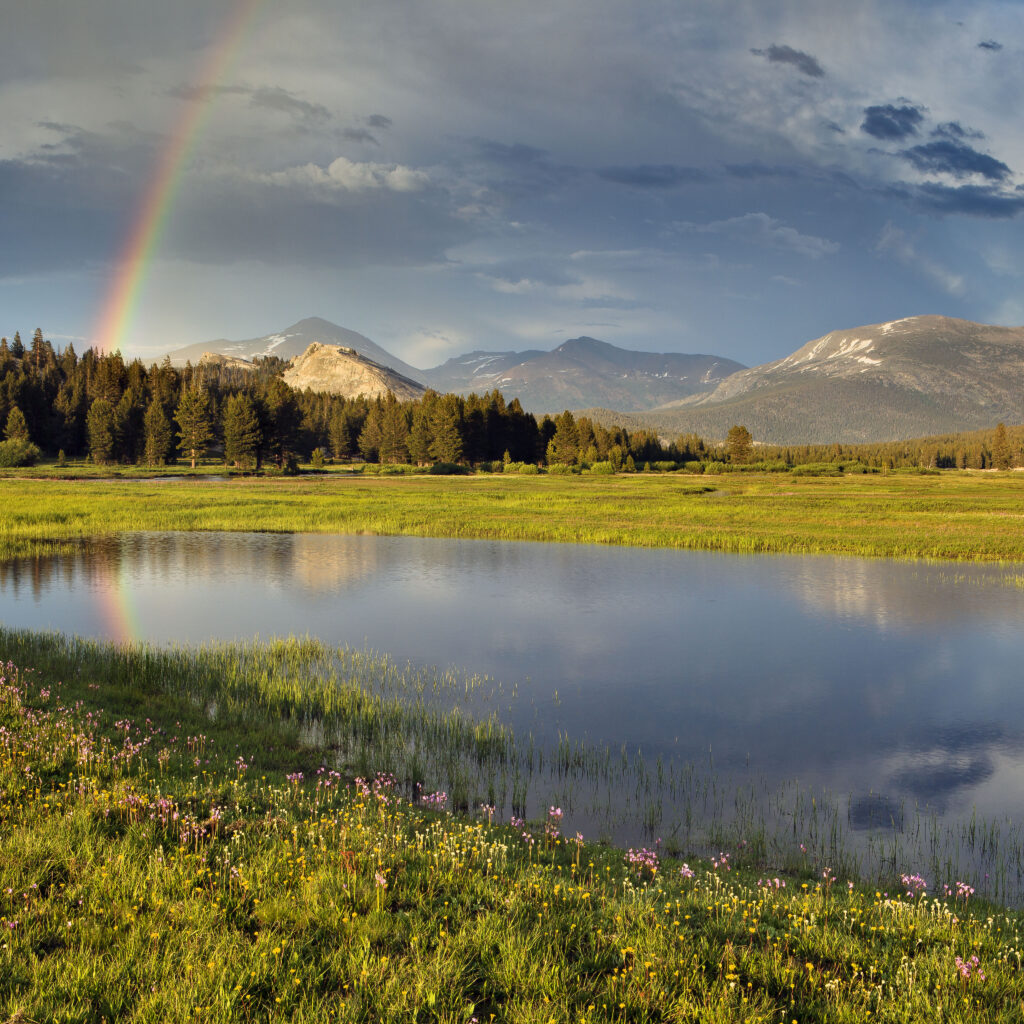
Once back at the car, head to the next destination: Tuolumne Meadows and Soda Springs. These sprawling meadows are stunning, and the 1.5-mile hike to Soda Springs offers views of the winding, clear river with granite mountains and forests in the distance. Soda Springs is a small, carbonated spring with water bubbling from the ground. Explore some of the smaller trails if you have time.
3. Lunch
The next stop is Tenaya Lake. Pack a swimsuit and take a dip in this glacier lake, but be warned, it will be chilly. Or take the 2.5-mile hike around Tenaya Lake to get even more incredible views. There are plenty of picnic areas around the lake when you’re ready to take a break.
4. Afternoon Activities
Olmsted Point is five minutes farther up the road. From this vantage point, you can look into the Valley in the opposite direction of Tunnel View with a view of the northeast side of Half Dome. You can also see Tenaya Lake and Tenaya Canyon.
May Lake Trail offers a shorter and a longer hike. The trailhead is 1.8 miles off Tioga Road on May Lake Road. The shorter leg of this hike is 2.5 miles round trip to Mary Lake and back, with amazing views of Mt. Hoffmann along the way. Or you can complete the full 6-mile hike up Mt. Hoffmann.
Bonus: If you visit Yosemite during the winter and aren’t able to access Mariposa Grove, be sure to check out the Merced Grove and Tuolumne Grove on the west end of Tioga Road. These groves don’t have quite as many giant sequoia trees as Mariposa — Merced has 20, Tuolumne has 30 — but they’re still breathtaking. The trail to Tuolumne Grove is 2.5 miles round trip. The trail to Merced Grove is 3 miles round trip, slightly more difficult, and the least crowded of all three.
5. Dinner & Relaxing
After all that hiking, let us make you dinner. We recommend the Fried Brussels Sprouts to start, the Grilled Trout for dinner, and a Classic Root Beer Float to finish it off. After a delicious dinner at Evergreen Lodge’s restaurant, get a good night’s sleep. Tomorrow’s your last day, and it won’t disappoint.
Day Four in Yosemite National Park
Day Four Yosemite Itinerary at a Glance:
- Start strong with a hearty breakfast at Rush Creek Lodge
- Drive to Hetch Hetchy Reservoir
- See the O’Shaughnessy Dam
- Hike Wapama Falls Trail and Rancheria Falls Trail
- Enjoy a picnic lunch when the mood strikes
- Consider exploring Carlton Falls Trail, Foresta Falls Trail, Little Nellie Falls Trail, and Lookout Point Trail
- Dine at Rush Creek Lodge
1. Breakfast
Since it’s your last day, go all out. Enjoy a delicious Lodge Omelet with hashbrowns, sourdough toast, and coffee, or choose another breakfast entree from the Rush Creek Lodge menu.
2. Morning & Afternoon Activities
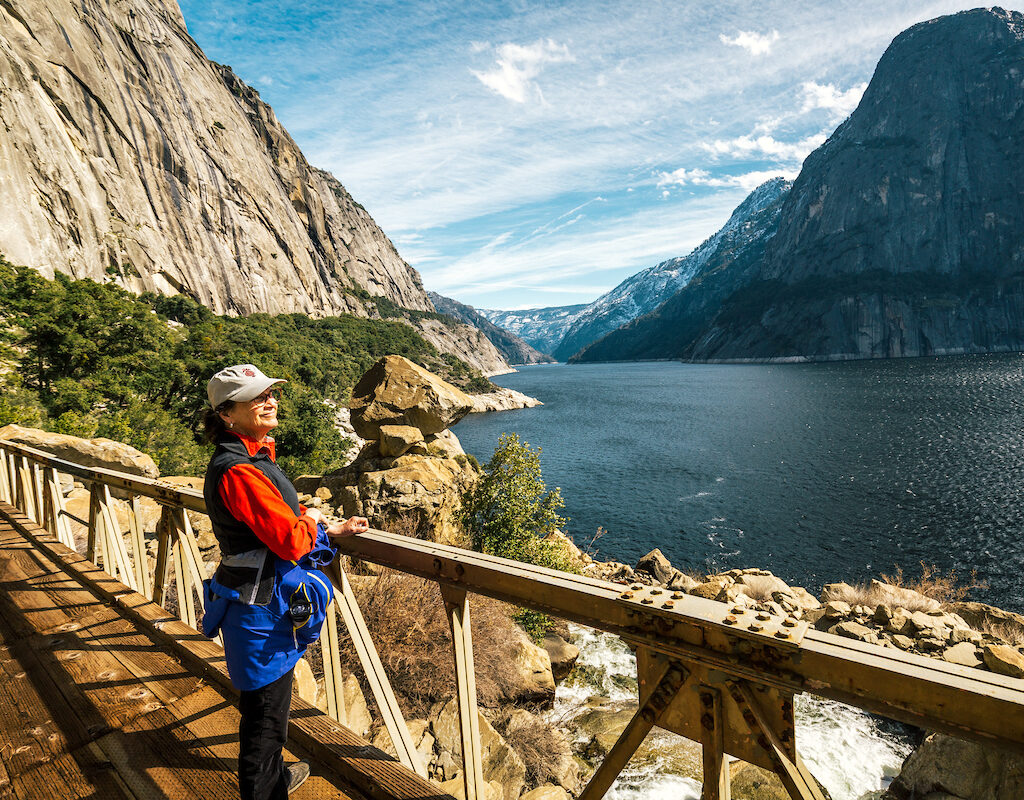
For your last day at Yosemite National Park, visit the Hetch Hetchy Reservoir, the closest Yosemite sight to our hotels. Prior to the dam’s completion in 1938, visitors claimed it looked like a mini Yosemite Valley. Today, it’s a large lake filled with 117 billion gallons of water held up by the O’Shaughnessy Dam. There are plenty of picnic spots around the Reservoir, so grab the cooler and enjoy lunch whenever you’re ready.
Bonus: Due to its lower elevation, Hetch Hetchy is a must-visit spot for winter vacations, as most of the area is accessible.
The most popular trail around Hetch Hetchy is the Wapama Falls Trail, a 5.5 mile round trip rated at a moderate level of difficulty. The bottom 400 feet of this waterfall are under the reservoir, but the top 1,400 feet are still visible and incredibly impressive to see. (Note: Be careful on this trail in early spring. The gushing waterfall makes the footbridge slippery and unsafe.)
The longest trail around Hetch Hetchy is the Rancheria Falls Trail. This 13-mile round trip is an extension of the Wapama Falls Trail and rates a 6 or 7 on the difficulty level. If you are up for the challenge, you won’t find a dramatic plunge waterfall, but you will see several smaller waterfalls through a narrow canyon. Rancheria Falls’ thousand-foot drop is more gradual.
Depending on how your legs are feeling, other hiking trails include:
- Carlon Falls Trail – 3.8 miles
- Foresta Falls Trail – 2 miles
- Little Nellie Falls Trail – 5.6 miles
- Lookout Point Trail – 2.8 miles
Bonus: If you are visiting Yosemite during the winter months, combine your trip to Hetch Hetchy with an afternoon at the Merced Grove of Giant Sequoias.
Dinner & Sleep
After four days of hiking, you must be tired and hungry. Dine at Rush Creek Lodge’s restaurant before catching up on rest for your travel day. We recommend starting with the Mini Barbacoa Tacos and ordering the Bison and Pork Bolognese for your entree. Top it off with an apple galette before heading to bed.
One Day in Yosemite
While we recommend spending at least two days exploring the national park, one day in Yosemite is enough time to visit some essential sites. On a day trip in Yosemite, you can see Tunnel View, Bridalveil Falls, El Capitan, and Yosemite Valley. You can fit in some hikes and a picnic lunch with the right planning.
About Yosemite National Park
Yosemite National Park is part of the Sierra Nevada located in eastern California, about a four-hour drive east of San Francisco. For perspective, Yosemite covers 1,200 square miles — approximately the size of Rhode Island.
At its heart, Yosemite Valley is a glacier-carved valley surrounded by granite monoliths, cliffs, and waterfalls with a river running through the middle of it. Beyond Yosemite Valley, you will find giant sequoia trees, high mountain meadows and lakes, and breathtaking views of mountains and valleys.
The Seasons in Yosemite
Every season in Yosemite offers its own beauties. During spring, you will see the waterfalls flowing full and fast with spring flowers blooming everywhere. Layering your clothes is recommended this time of year for the cooler mornings, warmer afternoons, and chilly evenings.
Summer days are longer and much warmer. Depending on the snowfall from the winter, some of the waterfalls dry up or become small streams during the summer. The park is generally more crowded, with fewer parking spots and more traffic.
Fall brings colorful foliage, and most of the waterfalls dry up. The temperatures cool down, along with the number of visitors. Don’t forget your clothing layers for those cooler mornings and evenings.
Winter is very unique in Yosemite. Skiing, ice skating, and snowshoeing become possible. There are far fewer crowds, but some roads are closed. Tioga, Glacier Point, and Mariposa Grove Roads all close during the winter months, from around mid-November to early December, and won’t reopen until sometime in May. Depending on how packed the snow becomes, the plowing process can take between one and two months. The Yosemite National Park webpage keeps visitors updated with the latest plowing progress and reopenings.
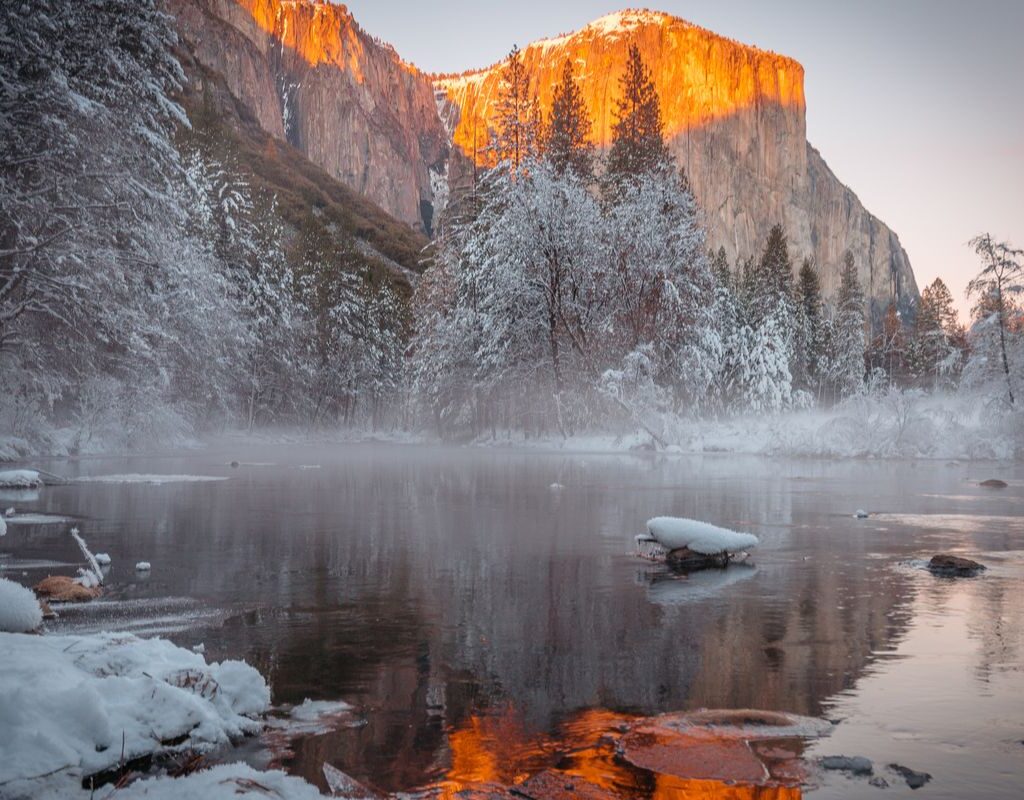
Tip: The best time to visit Yosemite is late May through October to avoid park closures for winter. We find that late May and September are the best months overall, but each time of year offers different benefits. Summer is the best season to visit Yosemite if you want long, warm days to explore and don’t mind crowds. Fall makes a better choice for those who don’t mind the dried-up waterfalls if it means cooler, less crowded trails. Plan a trip for the end of August or the beginning of September for the best of both seasons.
Packing Considerations
We can’t wait for you to experience Yosemite National Park, but we want to be sure you’re safe while having fun. Please wear appropriate shoes while in the park. You’ll be walking a lot, sometimes over uneven and slippery terrain, so good shoes are a must. We also recommend keeping bug spray in your pack if you’re visiting in the summer months.
Pack plenty of water and snacks each day. Some days, you’ll need to pack a picnic lunch. Our general stores carry all of the necessities.
Daily and Annual Passes to Yosemite
For most non-commercial vehicles with 15 or fewer passengers, the entrance fee into the park is $35. This gets your vehicle and all its passengers into the park for up to seven days. This fee can be paid with a credit card upon arrival or in advance if preferred.
The National Park Service also offers an annual pass for $80. The annual America the Beautiful Pass gives your vehicle access to more than 2,000 federal recreation sites across the country, including national parks and national wildlife refuges.
Regional transit service is also available to and from Yosemite National Park, including a stop at our Rush Creek Lodge property. For the most up-to-date information on openings and closings within Yosemite National Park, please visit the National Park Service website.
See You Soon!
Yosemite National Park has so many sights to see, and these itineraries are a great starting point. If you can’t complete it all in one trip, start planning your next vacation to the national park. Yosemite Hotels will be ready with accommodations and dining options.
Consider reserving guided access to Yosemite through Rush Creek Lodge, Evergreen Lodge, or Firefall Ranch for your next trip.
FAQs About How Many Days To Spend in Yosemite
Is two days enough for Yosemite?
Two days in Yosemite is typically enough time to see many of the park’s most famous landmarks, including Yosemite Falls, Half Dome, Bridalveil Falls, Glacier Point, and El Capitan.
Is three days in Yosemite enough?
Three days in Yosemite is plenty of time to visit many of the park’s most famous bodies of water, including Soda Springs, Tenaya Lake, and the Gaylor Lakes. You’ll also have time to see the magnificent sequoias in Merced Grove and Tuolumne Grove.
What is the best month to go to Yosemite?
The best month to go to Yosemite is late May or early September, when there are fewer crowds and the temperatures are milder. However, depending on what you’re hoping to experience, every season can make a case as the best time of the year to visit Yosemite.
How long does it take to go through Yosemite National Park?
The drive through Yosemite Valley is about 14 miles and takes about 30 minutes to drive, depending on traffic. You can easily make a full day out of your drive thanks to the many lookouts and hikes along the way.
How many days are required for Yosemite?
We recommend spending two to four days to see the majority of Yosemite’s main attractions. You can spend as little as an afternoon in Yosemite, but you won’t experience much beyond the Valley and a peek at El Capitan.
Is Sequoia or Yosemite better?
Yosemite is better for views of granite cliffs, towering waterfalls, and the sprawling Valley. While Yosemite is home to towering sequoia trees, you’re better off visiting Sequoia National Park if you’re looking for heavily forested terrain with some of the largest sequoia trees. Each park offers incredible hikes and stunning views, so you won’t be disappointed by either.